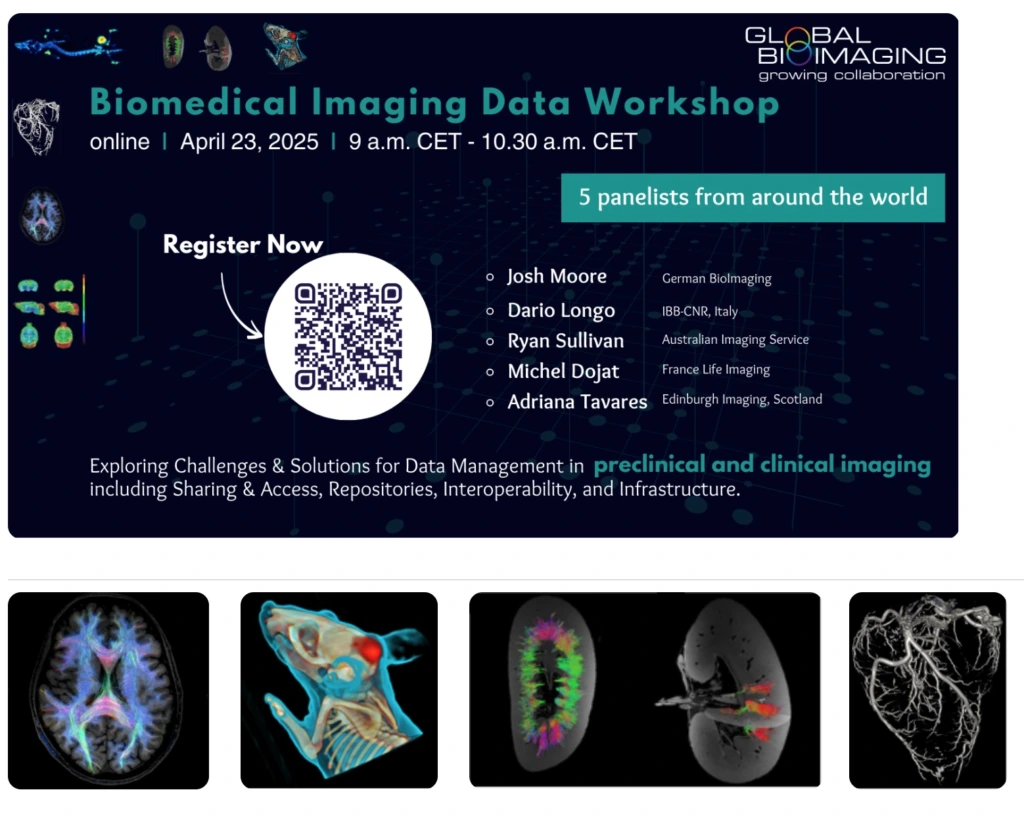
Global Community Effort on Imaging Data Standards and foundingGIDE
The recent EMBO Reports publication, A global effort toward standards for data sharing in biomedical imaging, represents a coordinated contribution from the international imaging community to address persistent challenges in data sharing and interoperability. Developed through discussions led by Global BioImaging, the paper brings together perspectives from experts across multiple countries and multiple imaging domains.
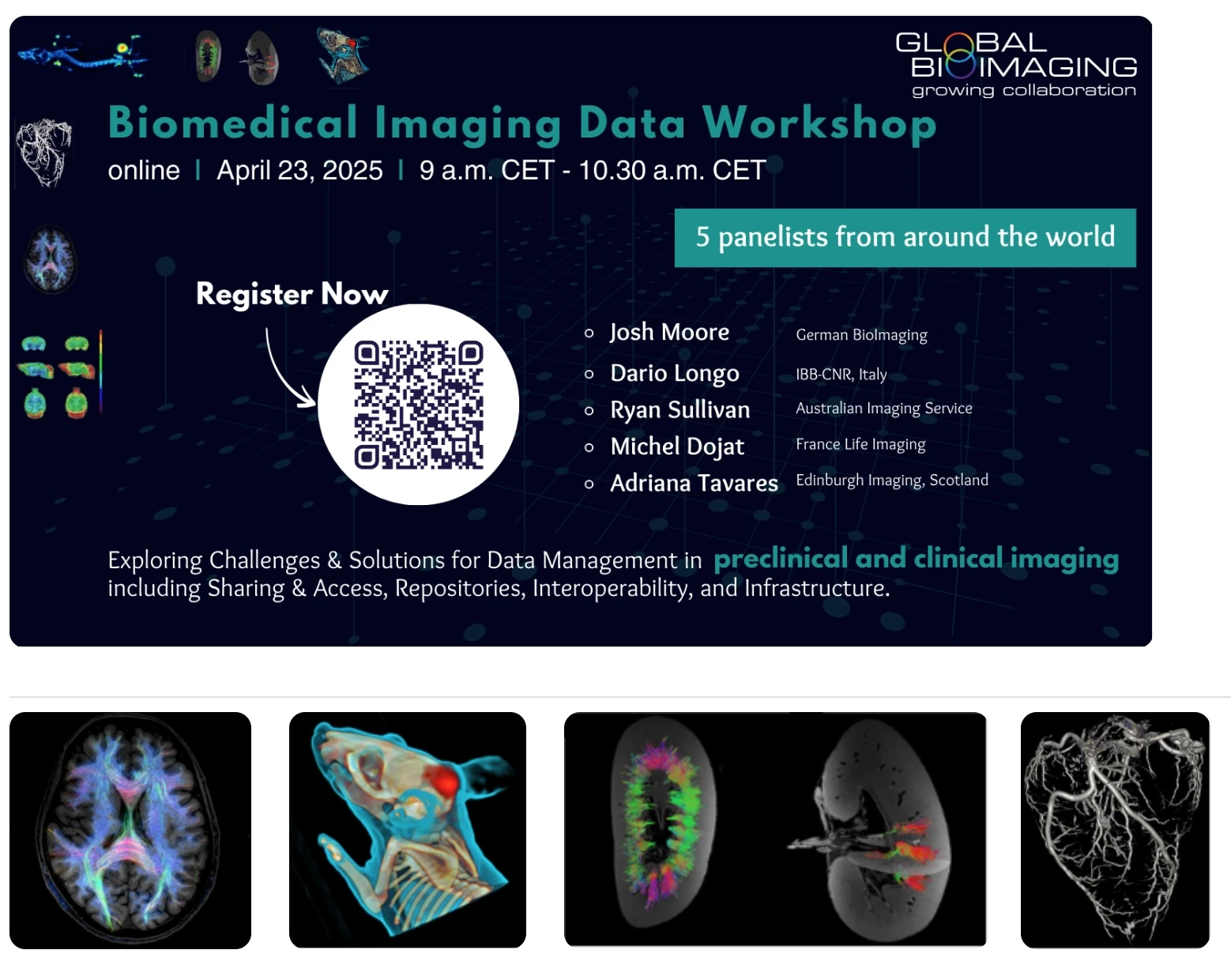
A key message of the publication is that the challenges associated with biomedical imaging data, such as fragmentation, lack of interoperability, and inconsistent metadata, cannot be addressed in isolation. The paper emphasizes that meaningful progress depends on coordination across infrastructures, disciplines, and countries.
The effort described in the article is therefore inherently collaborative. It brings together research infrastructures, community initiatives, and domain experts to define common priorities and identify practical steps forward. This reflects a growing recognition that solutions must be co-developed and widely adopted to be effective at scale.
The Role of foundingGIDE
Within this global landscape, foundingGIDE contributes directly to addressing the needs identified in the publication. Its activities are closely aligned with the priorities emerging from the international community, particularly in the area of semantic interoperability.
By focusing on the analysis and alignment of ontologies relevant to biological and preclinical imaging data, foundingGIDE addresses one of the key gaps highlighted in the paper: the lack of shared structure in imaging metadata. This work supports the development of a common foundation that enables data from different sources and modalities to be understood and reused.
Importantly, foundingGIDE is not positioned as a standalone solution, but as part of a broader, interconnected effort. Its role is to help bridge gaps, align approaches, and contribute to the implementation of shared solutions that emerge from the global community.
Read the article here.