foundingGIDE Technical Event 2026
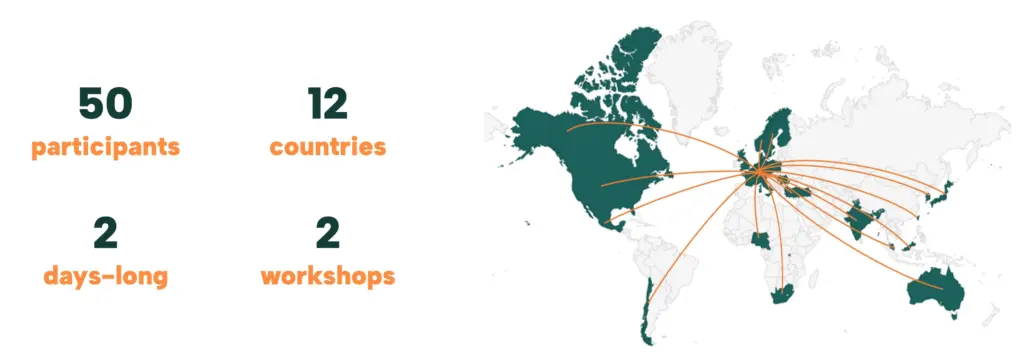
The foundingGIDE Technical Coordination Event 2026 brought together software developers, ontologists, data stewards, and imaging experts from around the world in Heidelberg, Germany, from 6–8 May 2026.
As the final technical meeting of the project, the event focused on validating foundingGIDE’s technical outputs, strengthening interoperability solutions, and preparing key resources for long-term community adoption.

Building on the momentum of the foundingGIDE Community Event held earlier in the week, the technical event combined an intensive developer hackathon with two community workshops, providing a unique opportunity to finalize technical resources, validate project outputs, and strengthen the foundations for their long-term sustainability beyond the lifetime of the project.
BioImage Hackathon 2026
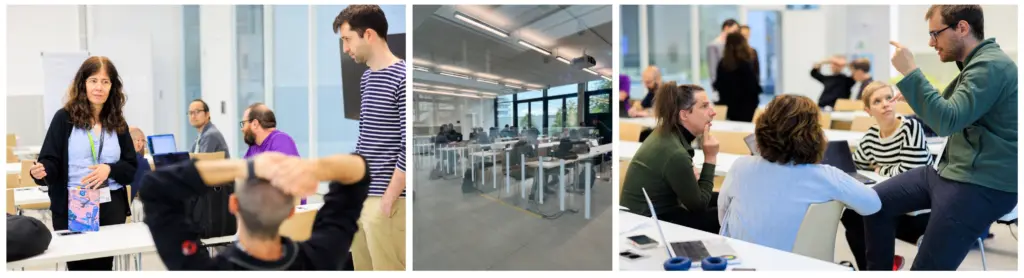
The BioImage Hackathon formed the core of the technical event, bringing together developers and domain experts to work on the practical implementation of foundingGIDE’s recommendations for FAIR image data. Teams worked collaboratively on a range of complementary topics, sharing expertise across repositories, research infrastructures, and software projects.
Key highlights
The hackathon focused on delivering practical solutions that improve metadata interoperability, ontology harmonization, and data exchange between image repositories.
- Ontology deployment and metadata mapping: Participants validated RO-Crate profiles and strengthened the integration between JSON-LD and RDF ontologies. These workflows will be published as practical guidance for the wider community.
- Ontology mapping with SSSOM: A dedicated group worked on harmonizing biological imaging vocabularies using the SSSOM mapping framework. The team successfully mapped 44 of the 52 core concepts from the Biological Imaging Methods Ontology (FBbi) to EDAM-Bioimaging, providing an important step towards a shared vocabulary across imaging resources.
- Automating metadata workflows: Developers explored tools to simplify metadata generation and data publication using LinkML and RO-Crate. Discussions also introduced the concept of a community repository where reusable metadata schemas can be shared, discovered, and adopted by imaging infrastructures.
- Volume Electron Microscopy metadata: Operating in close alignment with the hackathon’s objectives, this group defined metadata acquisition standards for the volume Electron Microscopy community. The group initiated a baseline landscaping process spanning specimen preparation, image acquisition configurations, and correlative image analysis metadata
Workshops
In parallel the hackathon, participants joined two interactive workshops:
Workshop on Preclinical and clinical data management and analysis
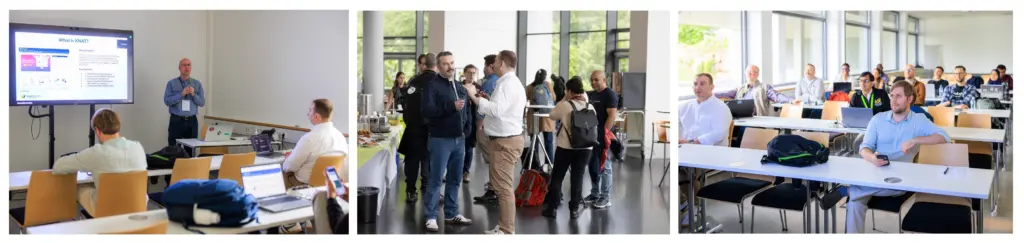
This workshop explored open-source solutions for managing preclinical and clinical imaging data, with hands-on demonstrations of XNAT and the Australian Imaging Service (AIS) platform. Discussions covered secure data management, workflow automation, and scaling image analysis pipelines from local environments to shared infrastructure.
Workshop on Guidelines on providing image analysis as a service
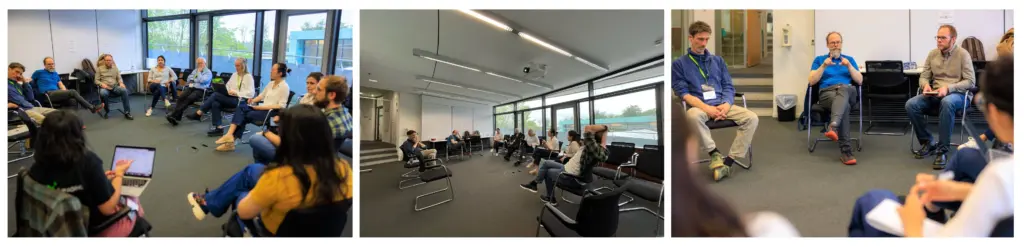
Image analysis experts, facility managers, and infrastructure providers discussed sustainable approaches for delivering image analysis services. Topics included funding models, staff development, career pathways for image analysts, and recommendations for establishing robust and sustainable analysis services within imaging facilities.
Event outcomes
The Heidelberg Technical Event marked the successful conclusion of foundingGIDE’s technical development activities. A more extensive report of this event can be found in foundingGIDE Deliverable 9.2.