foundingGIDE Community Event 2026
From 4–6 May 2026, the third and final foundingGIDE Community Event brought together the global imaging community at European Molecular Biology Laboratory in Heidelberg, Germany, marking a major milestone in the effort to establish the foundations of a Global Image Data Ecosystem (GIDE).
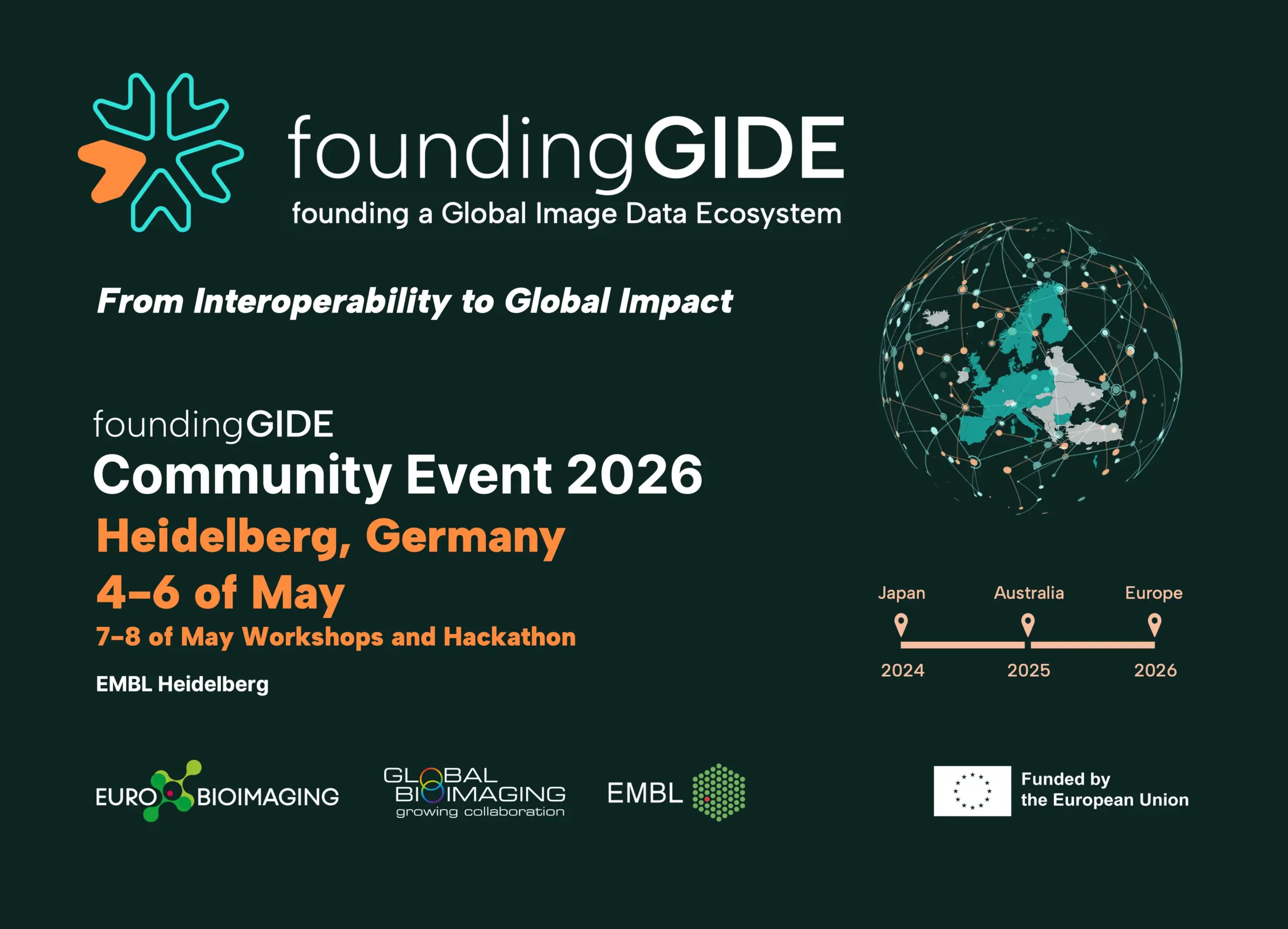
Following previous community events in Okazaki, Japan (2024) and Brisbane, Australia (2025), the 2026 edition served as the project’s final global exchange forum, bringing together researchers, infrastructure providers, data stewards, software developers, policymakers, funders, and industry stakeholders from around the globe.
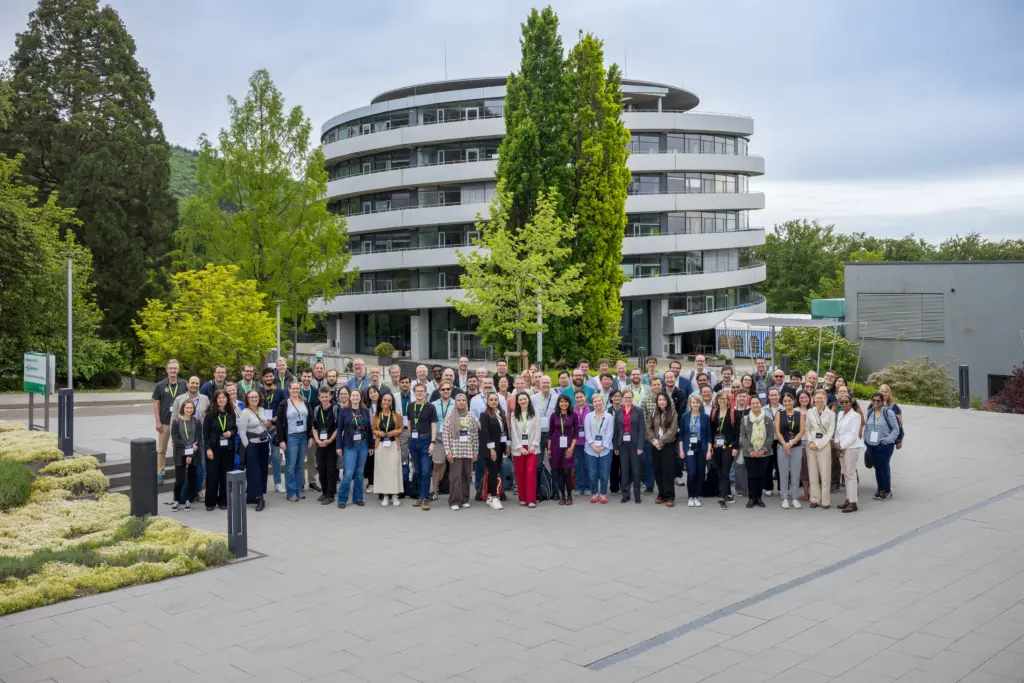
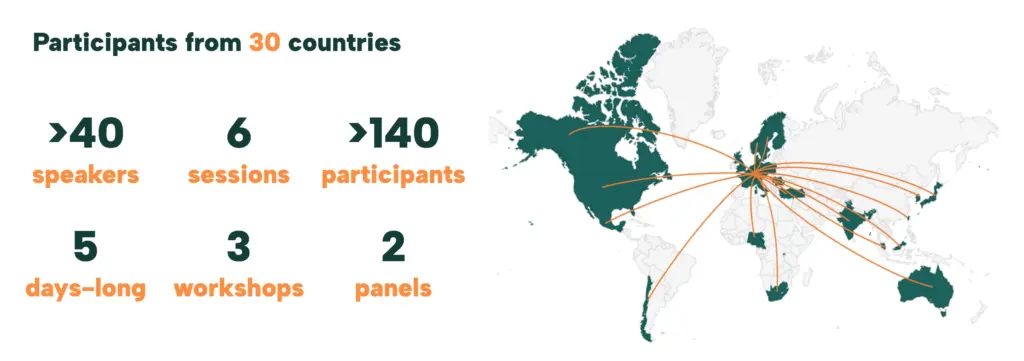
Hosted as a hybrid event, the Heidelberg meeting welcomed more than 100 in-person attendees and over 140 participants overall. Across 2.5 days, the program featured more than 40 speakers and six thematic plenary sessions designed to address the scientific, technical, and policy challenges surrounding global image data sharing and interoperability.
Under the theme “From Interoperability to Global Impact”, the event focused on consolidating the project’s achievements while building momentum toward a sustainable and internationally coordinated imaging data ecosystem. Through strong coordination with Global BioImaging and the broader international imaging ecosystem, the event fostered discussions on how imaging repositories, infrastructures, and communities can collectively support long-term data sharing and reuse.
Participants explored how globally coordinated approaches are essential for improving interoperability between repositories, enabling cross-disciplinary data reuse, supporting AI-ready datasets, and ensuring sustainable long-term stewardship of imaging data. These discussions formed the foundation for the six thematic plenary sessions that structured the event program.
Session 1: Data sharing policy and sustainability
The opening discussions focused on the alignment of international policies, funding strategies, and infrastructures needed to support imaging data as a long-term global research asset. Discussions highlighted major international initiatives advancing AI-driven science, open data, and cross-border research collaboration, including efforts linked to the European Open Science Cloud (EOSC) and emerging national “AI for science” strategies.
Speakers emphasized the growing importance of sustainable infrastructures capable of supporting rapidly increasing imaging data volumes while enabling FAIR and interoperable data sharing across institutions and countries. The session also addressed the often overlooked challenge of maintaining and coordinating the essential technical foundations that support open science, including repositories, standards, and data stewardship services.
Several presentations showcased practical approaches to strengthening sustainability, such as professionalizing data stewardship, improving data quality control, and integrating AI-assisted workflows into scientific publishing and data management. Overall, the session reinforced the need for a collective shift from viewing data as an individual asset toward a model of shared community stewardship, where funders, research infrastructures, industry, and researchers collaborate to ensure the long-term usability and impact of imaging data.
Recordings:
- Jan Korbel: EMBL Data Science Centre, EMBL, Germany, recording
- Michael Arentoft: Data sharing policy and enablers – European Commission perspective, European Commission, recording
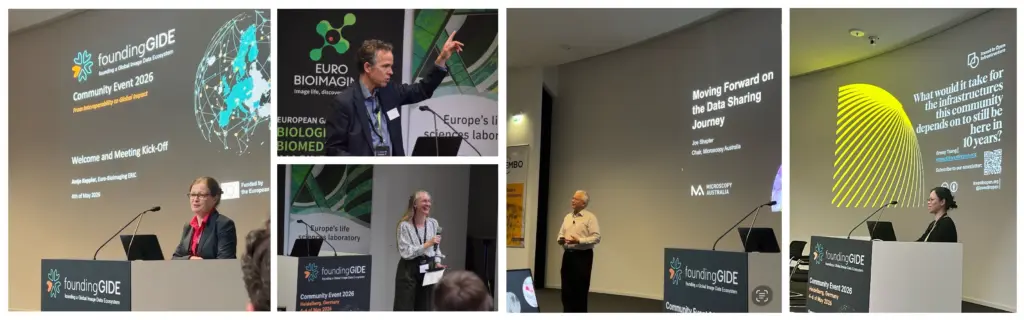
- Joe Shapter: Moving Forward on the Data Sharing Journey, Microscopy Australia, recording
- Thomas Lemberger: Driving data sharing policies in publishing at EMBO Press, EMBO, Germany, recording
- Kanae Kurata: Advancing AI for Science and Data Sharing: Japan’s Initiatives, Ministry of Education, Culture, Sports, Science and Technology, Japan, recording
- Jason Swedlow: Building an AI-directed BioImage Data Infrastructure, Biohub, USA, recording
- Emmy Tsang: The Hidden Cost of Data Sharing Mandates: Infrastructure Risk in the Age of Data Policy, Invest in Open Infrastructure, recording
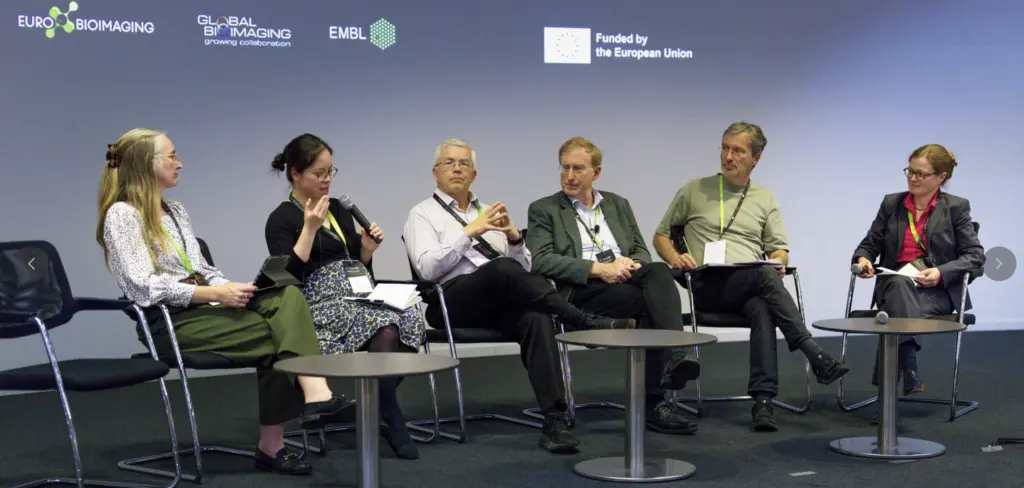
Panel discussion on How Can Policy Support Global Data Sharing?
The first session continued with a panel discussion on How Can Policy Support Global Data Sharing? chaired by Antje Keppler, Euro-BioImaging, bringing together representatives from research infrastructures, funding and policy organizations, scientific publishing, and international imaging initiatives. The discussion featured Joe Shapter (Microscopy Australia and The University of Queensland), Emmy Tsang (Invest in Open Infrastructure), Thomas Lemberger (EMBO), Jason Swedlow (Biohub), and Lisa Yen (Microscopy Australia).
The panel explored how policy frameworks, funding mechanisms, and institutional mandates can accelerate the transition toward sustainable and globally coordinated data sharing practices. Discussions highlighted the growing recognition of research data as a long-term scientific asset and a critical resource for training next-generation AI models, alongside the increasing need for stronger incentives and mandates supporting FAIR data sharing.
Panelists also addressed several persistent challenges, including cultural resistance to data sharing, uncertainty around data ownership, and the lack of sustainable funding models for research data infrastructures. Proposed solutions included long-term institutional funding mechanisms, more transparent infrastructure cost models, and governance approaches designed to ensure equitable participation and benefit-sharing across global regions, particularly for communities in the Global South.
The discussion further emphasized the importance of universal Persistent Identifiers (PIDs), interoperable metadata standards, and automated data capture workflows to support the creation of AI-ready datasets at scale. Speakers stressed that future infrastructures must reduce the manual burden on researchers while ensuring proper attribution, traceability, and responsible reuse of data. Overall, the panel concluded that achieving a functional global ecosystem will require coordinated policy action, stronger collaboration between funders, publishers, infrastructures, and research communities, as well as sustained international cooperation around machine-readable and interoperable data practices.
Session 2: Technical foundations of global data sharing
This session focused on the core building blocks of the Global Image Data Ecosystem (GIDE) by addressing metadata models and ontologies. A primary highlight was the demonstration of the GIDE BioImaging Search Portal, which enables federated queries across the BioImage Archive (BIA), Image Data Resource (IDR), SSBD:database and SSBD:repository through a common API. This development was underpinned by a comprehensive mapping effort that identified key metadata components across these repositories, facilitated by the use of RO-Crate and JSON-LD for standardized data packaging.
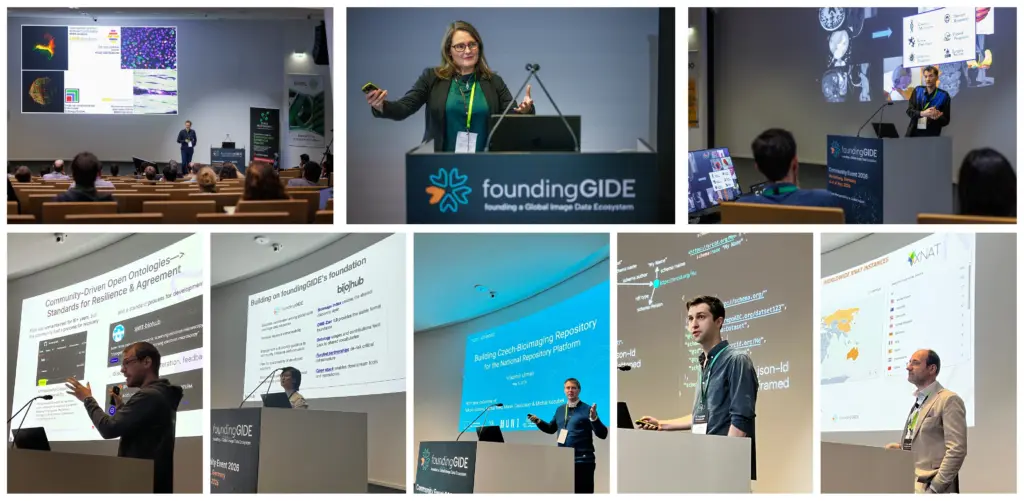
The session also featured advancements in regional and domain-specific infrastructures, including national repository updates from the Czech Republic and the Netherlands, and the use of XNAT for managing large-scale medical imaging data. Discussions emphasized the integration of AI, showcasing how LLMs can extract structured metadata from clinical reports to enrich datasets for machine learning, as well as outlined future roadmaps for OME-Zarr 1.0 and the BioImage Index.
Recordings:
- Matthew Hartley: GIDE’s BioImaging Search Portal, EMBL-EBI, UK, recording
- foundingGIDE BioImaging Team: Standard, schemas, ontologies and glue: how GIDE search actually works, recording
- Dario Longo: Development of standards and protocols for the FAIRification of preclinical image datasets, National Research Council of Italy (CNR), Italy
- Vladimir Ulman: Building Czech-Bioimaging Repository for the National Repository Platform, Masaryk University & Czech BioImaging, Czech Republic, recording
- Katy Wolstencroft: NL-Bioimaging: A Distributed FAIR Infrastructure for Dutch Bioimaging, Amsterdam University Medical Center, Netherlands, recording
- Chi-Li Chiu: Building an AI-directed BioImage Data Infrastructure, Biohub, USA, recording
- Stefan Klein: Infrastructure for medical image analysis & AI research, Erasmus University Medical Center, Netherlands, recording
Session 3: Community efforts on global data sharing
Building on the momentum established during the previous community events in Japan and Australia, this session highlighted the critical role of international collaborations in shaping the future of global image data sharing. focused on the “social bridges” required to make a global data ecosystem successful. Discussions emphasized the transition from individual data “ownership” toward shared community stewardship, highlighting the importance of trust, coordination, and inclusive participation across international imaging communities.
Speakers explored the role of global initiatives such as Global BioImaging in connecting imaging communities worldwide, supporting training activities, and empowering core facility staff as key enablers of FAIR data practices. The session also addressed regional challenges and opportunities, including infrastructure limitations, fragmented data landscapes, and the need for harmonized standards and capacity building across diverse scientific communities.
Several presentations showcased practical solutions designed to simplify and scale FAIR data generation, including semi-automated metadata capture tools, modular metadata templates, and persistent hardware descriptors. National initiatives from countries such as India and Korea demonstrated growing investments in large-scale biological image archives and data infrastructures. The session also highlighted the importance of data sovereignty, stressing that sustainable and equitable data sharing frameworks must ensure that local communities retain agency, ownership, and benefit from the data they generate.
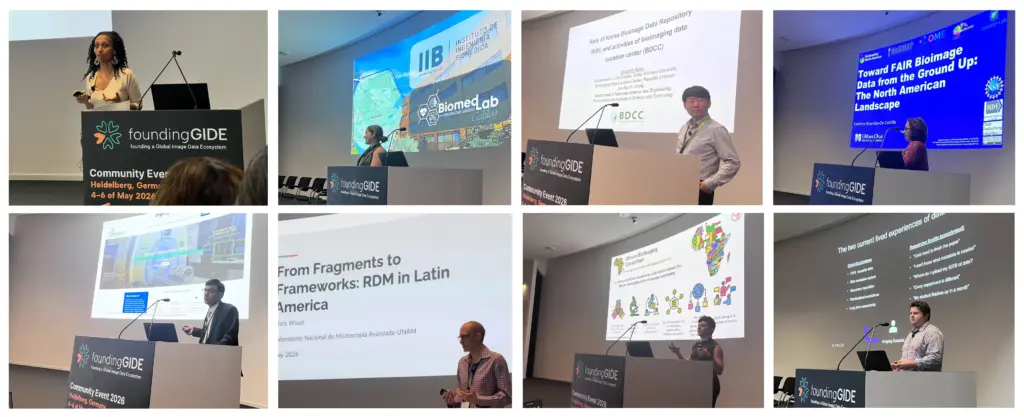
Recordings:
- Yara Reis, Global BioImaging, recording
Christopher Wood: From Fragments to Frameworks: RDM in Latin America, Laboratorio Nacional de Microscopía Avanzada-UNAM, Mexico, recording - Arun Sharma: Biological Image Metadata Standardization: Opportunities, Challenges, and the Role of IBIA, Indian Biological Data Centre, Regional Centre for Biotechnology, India, recording
- Caterina Strambio De Castillia: Toward FAIR Bioimage Data from the Ground Up: The North American Landscape, UMass Chan Medical School, USA, recording
- Caron Jacobs: Bandwidth, Bureaucracy, and Belonging: Imaging Data Management Priorities From an African Perspective, University of Cape Town, South Africa, recording
- Nicholas Condon: From Ownership to Stewardship: Cultural Shifts in Imaging Data, The University of Queensland, Australia, recording
- Dongmin Kang: Role of Korea Bioimage Data Repository (KBI) and activities of bioimaging data curation center (BDCC), Ewha Womans University, South Korea, recording
- Andrea Lara: Emerging Local Innovations in Biomedical Image Data Sharing in Guatemala, Universidad Galileo, Guatemala, recording
Panel on Global community efforts on data sharing
The panel discussion, chaired by Yara Reis (Global BioImaging), explored global perspectives on contributing to a connected Global Image Data Ecosystem (GIDE). It brought together representatives from diverse regional imaging and data infrastructures, including Chris Wood (National Laboratory for Advanced Microscopy, Mexico), Arun Sharma (Indian Biological Data Centre / IBIA, India), Caterina Strambio De Castillia (UMass Chan Medical School, USA), Caron Jacobs (University of Cape Town, South Africa), Nicholas Condon (The University of Queensland, Australia), Dongmin Kang (Ewha Womans University, South Korea), and Andrea Lara (Universidad Galileo, Guatemala).
The panel discussion focused on the transition from policy-level to the practical implementation of a truly interoperable global imaging data ecosystem. Participants explored what currently enables or hinders the sharing, access, and reuse of imaging data across different regional and institutional contexts, highlighting that the main challenges are now less technical and more organizational and cultural.
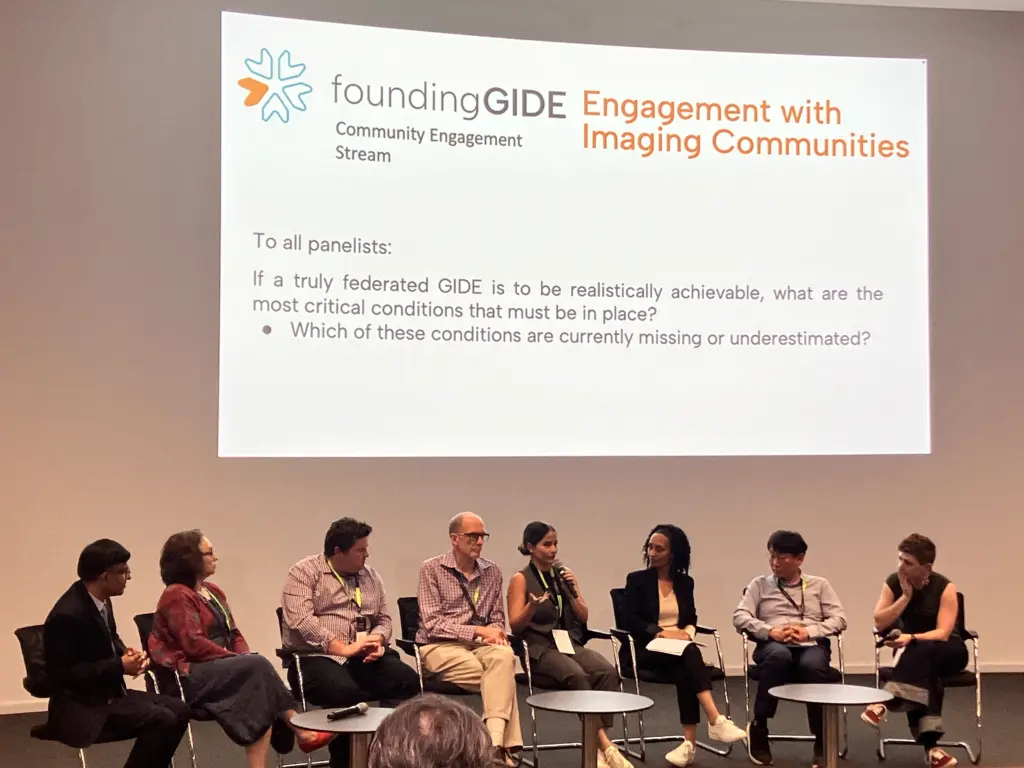
A strong consensus emerged that key barriers include limited local infrastructure, insufficient capacity in data stewardship and curation roles, fragmented adoption of standards, and misaligned incentives for researchers. Funders, publishers, and institutions were identified as critical actors in driving change, particularly by supporting data management costs, strengthening enforcement of data policies, and enabling sustainable research data practices.
The discussion emphasized the importance of investing in people and skills, particularly through data stewards and curators, alongside the development of widely adopted standards and ontologies to enable interoperability. Participants also highlighted the need to reduce friction in data sharing, build trust in shared infrastructures, and better demonstrate the tangible benefits of open and interoperable data through concrete use cases and success stories.
Session 4: Data Sharing Across Domains
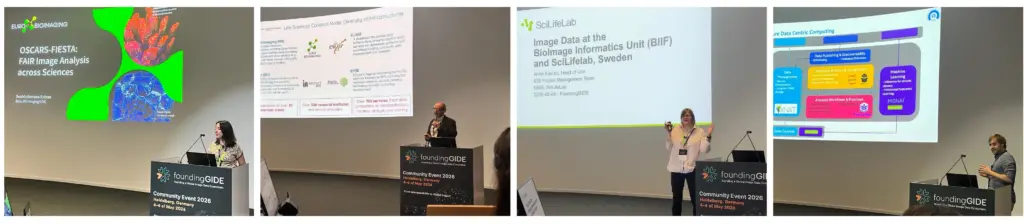
The session explored how common standards, interoperable infrastructures, and shared frameworks can connect previously isolated data silos into a global and reusable research ecosystem. Speakers highlighted the importance of cross-disciplinary collaboration and demonstrated how similar analytical approaches can be applied across fields such as bioimaging, astronomy, and environmental sciences.
The session featured discussions on the role of the EOSC as a federated environment for FAIR data and services, enabling research infrastructures to collaborate while maintaining autonomy. Presentations also showcased the reuse of workflows and analytical tools across scientific domains through platforms such as Galaxy and semantic annotation frameworks like EDAM, illustrating the growing potential for interoperability and shared methodologies.
In addition, speakers addressed the technical and legal challenges associated with sharing multimodal and sensitive datasets. Topics included the need for federated infrastructures, automated data brokering systems, and scalable computing environments capable of supporting secure data analysis and AI development across institutions. The session highlighted how national and international infrastructures are increasingly adopting distributed models that enable reproducible research, secure handling of clinical data, and federated learning approaches without requiring sensitive datasets to leave their home institutions.
Recordings:
- Bob Jones, The European Open Science Cloud, EOSC Association and CERN, recording
- Beatriz Serrano-Solano: FAIR Image Analysis across Sciences, Euro-BioImaging ERIC Bio-Hub, Germany, recording
- Ryan Sullivan: Australian Imaging Service: Secure National Data Fabric for Reproducible Biomedical Research, Australian Imaging Service, The University of Sydney, Australia, recording
- Peter Maccallum: Managing research data across disciplines, borders and time, ELIXIR, UK, recording
- Anna Klemm, Image Data at the BioImage Informatics Unit (BIIF) and SciLifelab, Sweden, SciLifeLab, Sweden
Session 5: Building Common Sustainable Solutions
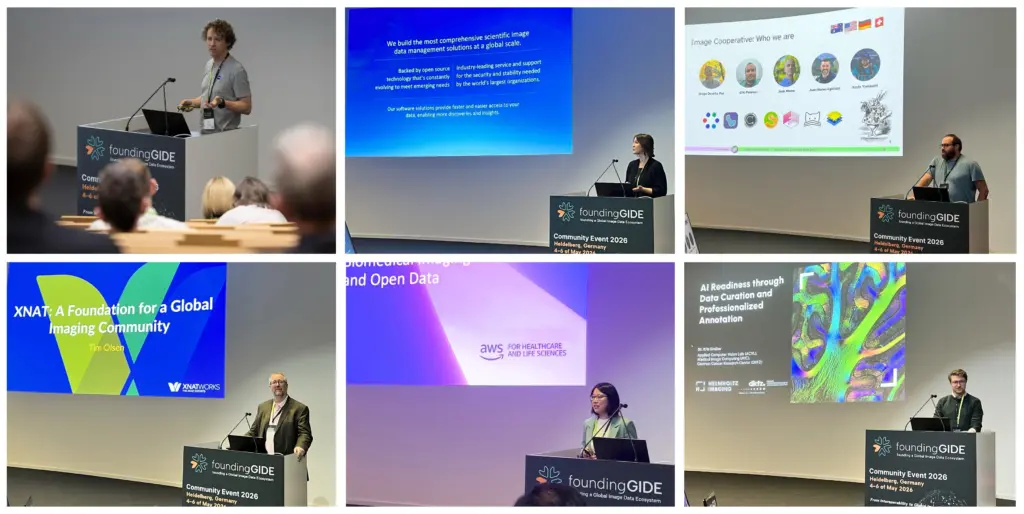
This session brought together researchers, software developers, infrastructure providers, and industry representatives to discuss the long-term sustainability and interoperability of the global imaging ecosystem. Speakers highlighted complementary approaches ranging from open-source software maintenance and community-driven standards development to scalable cloud infrastructure and interoperable hardware platforms.
Topics included sustainable support models for tools such as OMERO, Bio-Formats, and OME-Zarr, advances in large-scale image visualization through platforms like WebKnossos, and industry efforts to promote interoperability through open APIs and standardized AI model exchange formats. The session also explored the role of cloud infrastructure in enabling large-scale data access and reuse, as well as the importance of developing practical, researcher-friendly tools that naturally encourage FAIR data practices and long-term community adoption.
Recordings:
- Yin Cai: Democratizing Biomedical Imaging Research with AWS Health AI and Open Data, Amazon Web Services, Public Sector Healthcare & Life Sciences, Germany, recording
- Norman Rzepka: Visualization, annotation, sharing and processing of large images with Webknossos and OME-Zarr, scalable minds, Germany, recording
- Tim Olsen – XNAT: A foundation for a Global Imaging Community, XNAT Works Inc, USA, recording
- Eric Perlman: The role of cooperation in global imaging, Image Cooperative, recording
- Erin Diel: Turning Open Innovation into Production-Ready Bioimaging Platforms, Glencoe Software, Inc., recording
- Sebastian Rhode: The CZI (Carl Zeiss Image) Format & Open Interfaces: How ZEISS Enables Sustainable, Interoperable Bioimaging Workflows, ZEISS Microscopy, Germany, recording
Session 6: Data Reuse and AI-Ready Data
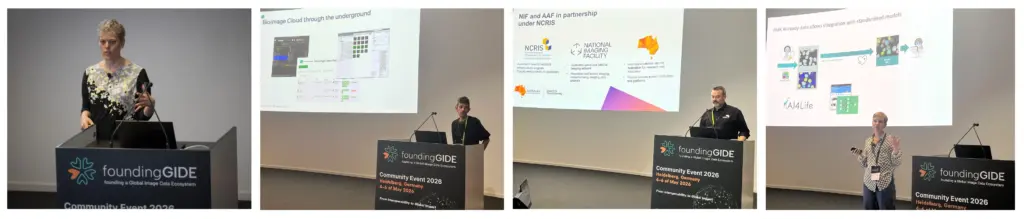
The session focused on the growing need for high-quality, well-annotated, and interoperable datasets to support the development of AI in bioimaging and the life sciences. Speakers emphasized that AI-ready data depends on FAIR principles, structured metadata, standardized formats such as OME-Zarr, and reliable expert annotations.
The session highlighted emerging standards and infrastructures designed to improve data reuse, including annotation frameworks such as MIFA (Metadata for Image Findings and Annotations), cloud-based data sharing and computing infrastructures, and tools supporting semi-automated image segmentation and curation. Discussions also addressed challenges related to data quality, annotation bias, and the lack of publicly available labels and segmentation data, which continue to limit reproducibility and benchmarking efforts across the community.
In addition, speakers explored the governance and access mechanisms needed to enable secure and traceable reuse of sensitive imaging datasets across institutions through federated identity systems and shared policy frameworks. Overall, the session reinforced that building a sustainable GIDE requires not only preserving imaging data itself, but also standardizing the metadata, annotations, and access layers that make datasets reusable and AI-ready.
Recordings:
- Juan Antonio Vizcaino: ProteomeXchange and MetabolomicsHub: Global initiatives for standardising open data practices in proteomics and metabolomics, EMBL-EBI, UK, recording
- Keith Brophy: Connecting Imaging Infrastructure: Federated Identity in a Distributed Research Network, Australian Access Federation, Australia, recording
- Kris Dreher: AI Readiness through Data Curation and Professionalized Annotation, Helmholtz Imaging, Germany, recording
- Teresa Zulueta-Coarasa, Unlocking bioimage data for AI through the FAIR principles, EMBL-EBI, UK, recording
- Guillaume Gay: BioImage Cloud through the underground, France BioImaging, Université de Montpellier, France, recording
- Michele Darrow: Depositing Biological Segmentation Datasets FAIRly, Rosalind Franklin Institute, UK, recording
Wrap Up session
The final plenary session provided an overview of the project’s major outcomes and demonstrated the progress made toward foundingGIDE’s central mission: enable global open image data repositories interoperability. Key achievements presented during the session included the implementation of shared ontologies, the development of the common GIDE RO-Crate exchange schema, and the launch of a centralized image data search portal. The session also reflected on foundingGIDE’s international journey, from the first community event in Japan in 2024, through ecosystem alignment activities in Australia in 2025, to the final 2026 gathering in Heidelberg.
While the foundingGIDE project itself is approaching its conclusion, the GIDE is only just beginning. Through the foundingGIDE initiative, we have established strong foundations, built a global network of engaged stakeholders, and advanced a shared commitment to standardizing biological and preclinical imaging data while developing sustainable technical solutions to enable interoperability across four major image data repositories: BioImage Archive, Image Data Resource, SSBD:database and SSBD:repository.
June 2026 will be a particularly important month for the project, as we publish the final deliverables summarizing the outcomes and recommendations developed throughout foundingGIDE. Stay tuned, and sign up for the foundingGIDE newsletter to be among the first to hear about these deliverables and the next steps for GIDE.