GIDE Stack
The foundingGIDE project has successfully developed a technical stack that enables researchers to search bioimaging data across globally distributed repositories, laying practical foundations of an interoperable global image data ecosystem (GIDE).
The GIDE stack represents 30 months of technical developments aimed at enhancing the interoperability of biological and preclinical image data resources.

GIDE stack is a multi-layered framework of metadata standards, ontologies, and tools designed to transform distributed, heterogeneous repositories into a harmonized, globally searchable ecosystem.
GIDE technical stack includes the metadata exchange schemas and recommended ontologies, as they form the essential foundational layers of the ecosystem’s technical architecture. The GIDE stack is made tangible to the users through the tools developed by the project, such as the Search Portal and API, that are intrinsically dependent on the underlying standards developed in foundingGIDE.
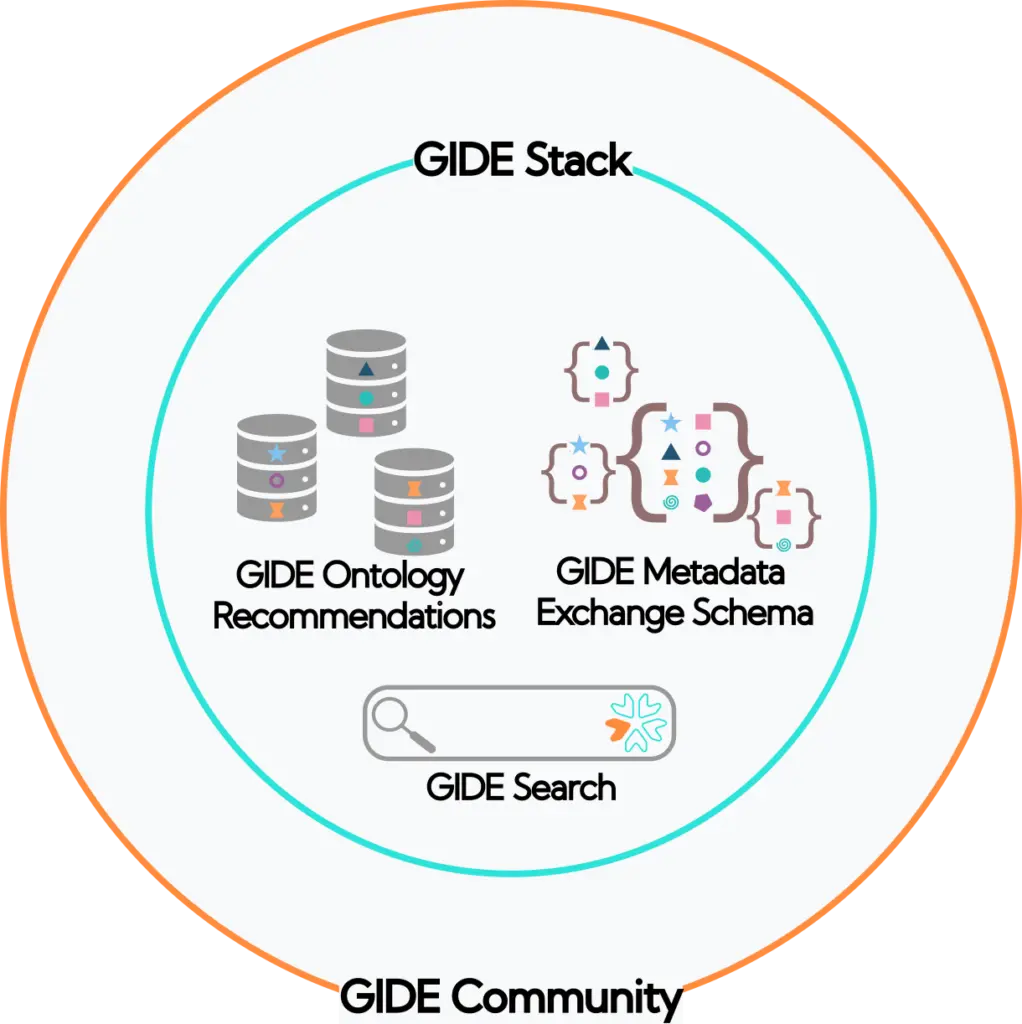
Depending on your scientific domain, you can explore the specific standards, ontologies, and tools developed or continue in this page for an overview:
GIDE Metadata schemas
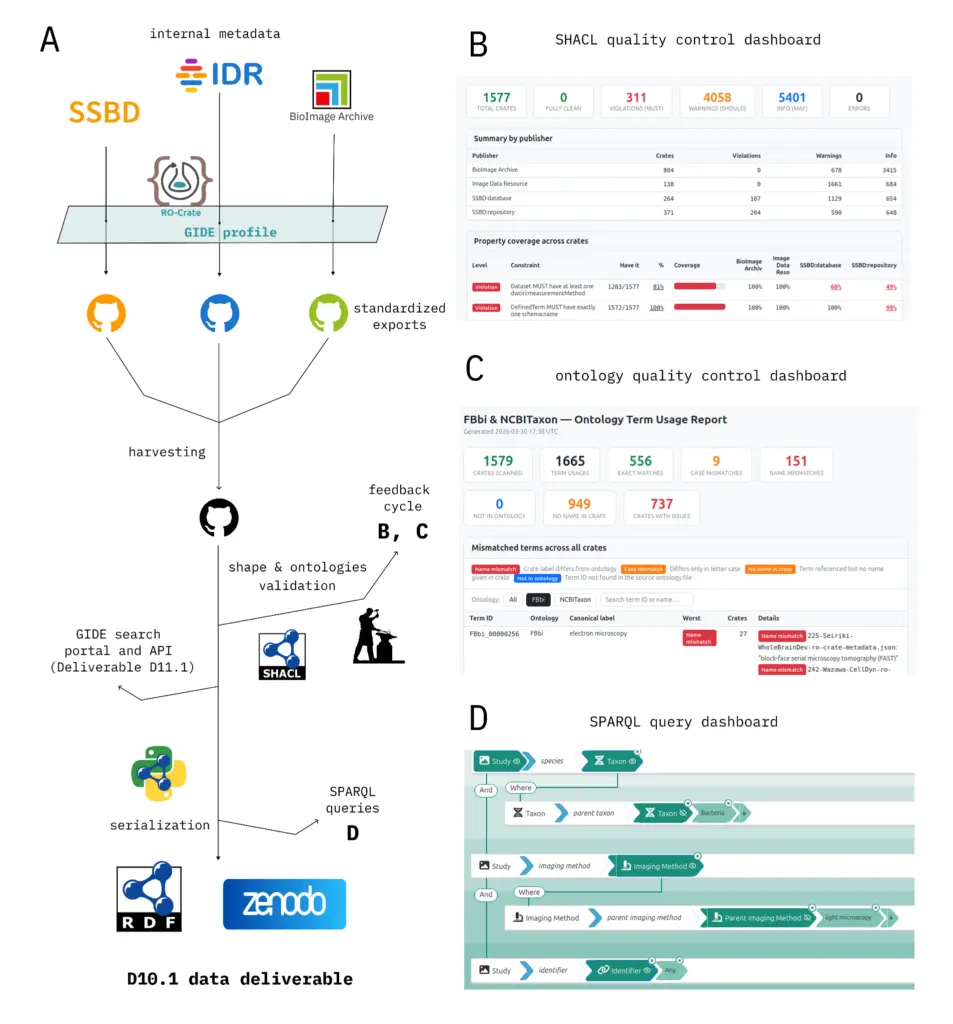
- Biological Metadata Model (GIDE RO-Crate Profile): The primary unit of exchange is a detached RO-Crate, which decouples lightweight metadata from heavy image data payloads. Here you can check the complete GIDE RO-Crate profile and have a look at the metadata snapshot of the studies flowed from the BioImage Archive, IDR and SSBD repositories through a pipeline of standardization, harvesting and SHACL validation. More information on this work can be found in the following foundingGIDE Deliverables: D6.1, D7.1, D10.1. This profile uses a two-tier specification:
- a mandatory core of nine properties for basic discovery (id, name, description, datePublished, license, author, publisher, about, measurementMethod) and
- an extended layer of six properties (identifier, keywords, thumbnailUrl, seeAlso, funder, size) for richer presentation.
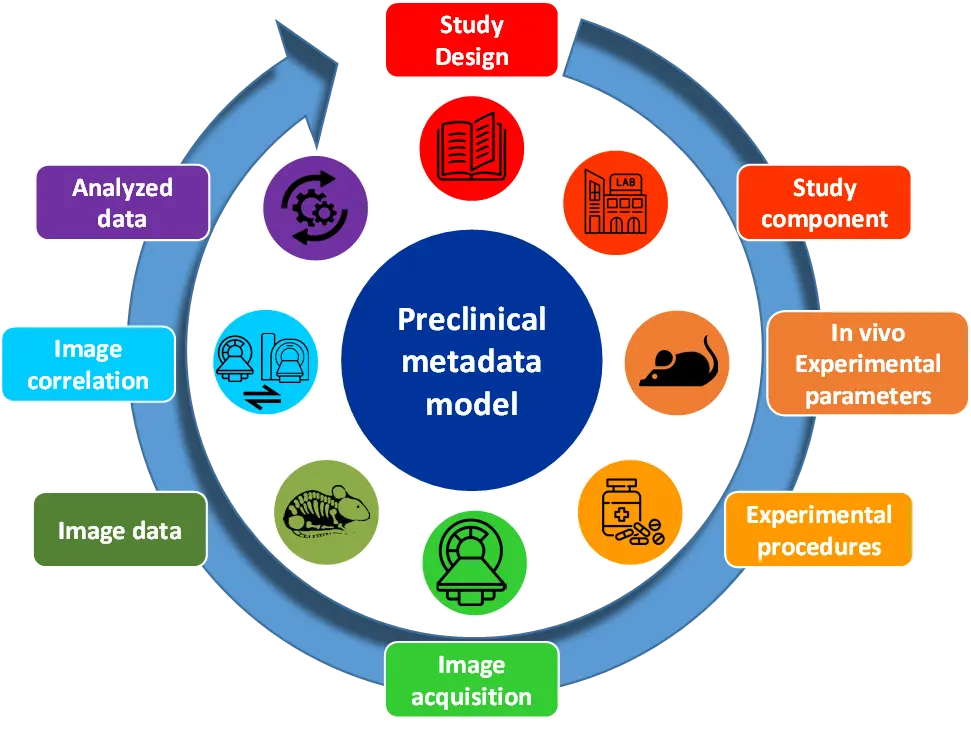
- Preclinical Metadata Model (PRISM Metadata Model): For the preclinical domain, foundingGIDE developed the PReclinical Imaging Standardized Metadata (PRISM) model. This model is organized into eight major sections capturing the entire experimental lifecycle, from study design and in vivo parameters to image acquisition and analyzed data. More on this work can be found in the foundingGIDE Deliverable D8.1. The sections of this model are:
- Study Design, Study Component, In Vivo Experimental Parameters, Experimental Procedures, Image Acquisition, Image Data, Image Correlation, Analyzed Data
GIDE Ontology recommendations
This layer provides the common language that makes the structural metadata machine-readable and interoperable.
- Recommended Biological Ontologies: The stack universally adopts NCBITaxon for species and the Biological Imaging Methods Ontology (FBbi) for imaging methods. A major technical outcome was returning FBbi to active, community-governed maintenance to ensure it can evolve alongside rapidly developing imaging technologies. More on this work can be found in the following foundingGIDE Deliverables: D2.1, D5.1, D5.2
- Recommended Preclinical Ontologies: A rigorous landscape analysis of 35 candidates resulted in a set of recommended preclinical ontologies, including DOID (disease), ChEBI (drugs), UBERON (anatomy), and DICOM (imaging modalities). More on this work can be found in the following foundingGIDE Deliverables: D2.1, D4.1
GIDE Tools
This layer comprises the software that consumes the metadata and ontologies to provide user-facing services.
- Indexing and Search API: A catalogue indexing pipeline harvests RO-Crates from repositories (BIA, IDR, and SSBD) and ingests them into Elasticsearch. A REST-based Search API then exposes this index for third-party consumption. More information on this work can be found in the following foundingGIDE Deliverables: D10.1, D11.1
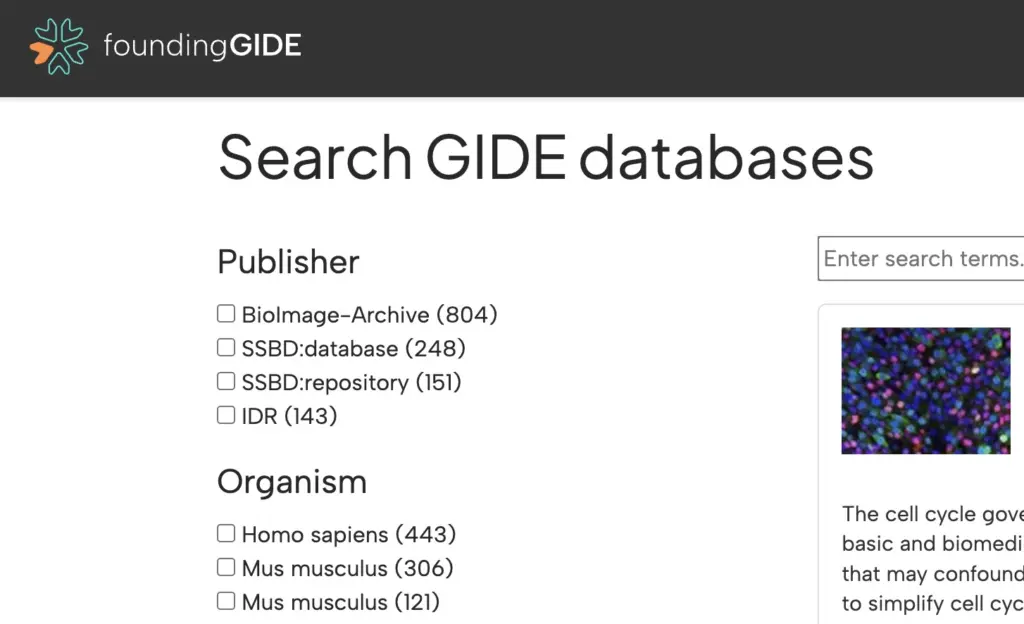
- Search Portals: The project deployed a GIDE BioImaging Search Portal to demonstrate cross-resource search. The GIDE search portal is a deployed, federated search system that allows users to query datasets across BIA, IDR, and SSBD through a single interface. Additionally, the Euro-BioImaging Access Portal has integrated the stack, mapping its technology services to FBbi terms and dynamically retrieving representative datasets via the API. More on this work can be found in the following foundingGIDE Deliverables: D11.1, D1.7
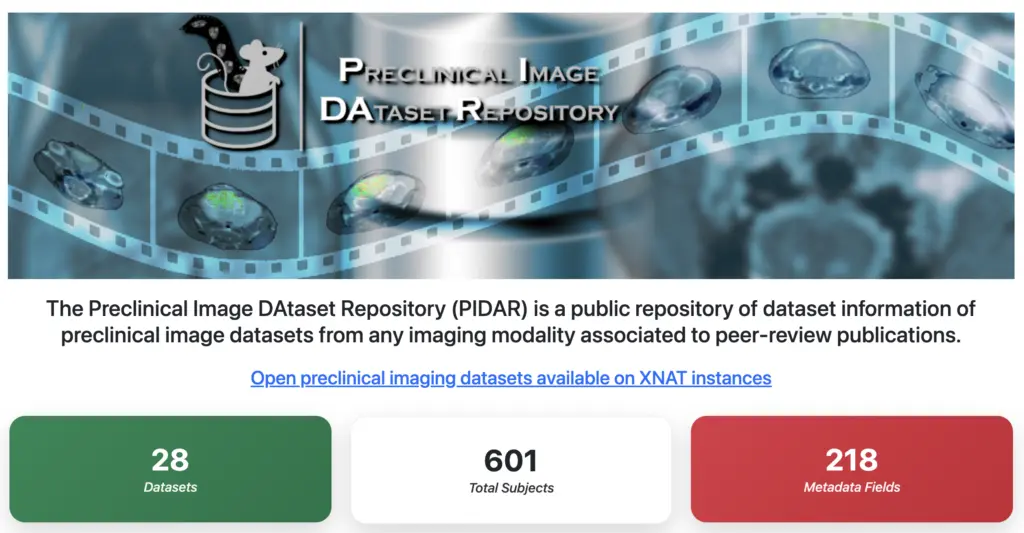
- Preclinical Tools: This includes the PIDAR platform, XNAT plugins for entering PRISM metadata, and a Python-based workflow for the automated extraction of ontology codes. More on this work can be found in the foundingGIDE Deliverable D12.1
Together these technical developments from the foundingGIDE project showcase how data interoperability, enabled by common ontologies and metadata schema across repositories, can power tools and application that directly benefit researchers across the globe.