PRISM: A New Metadata Model for Preclinical Imaging Data
The Euro-BioImaging Medical Hub and partners of the foundingGIDE Preclinical Stream have introduced PRISM (PReclinical Imaging Standardised Metadata),
PRISM (PReclinical Imaging Standardised Metadata) is a new proposed metadata model designed to improve the sharing, findability, and interoperability of preclinical imaging datasets.
Developed within the Euro-BioImaging Preclinical Imaging Working Group, PRISM builds on existing standards including ARRIVE 2.0 and REMBI, with the goal of supporting FAIR data principles and harmonizing metadata across the field.
The model defines a structured set of metadata elements, including mandatory and optional fields, to improve consistency and enable better data reuse in preclinical imaging
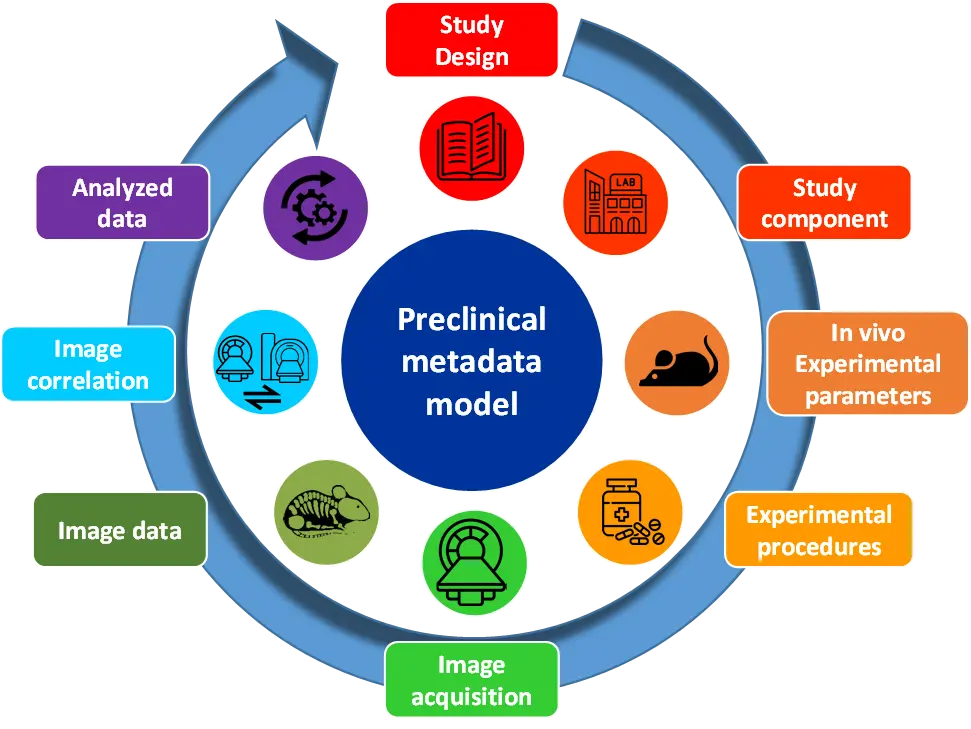
The PRISM metadata model is composed of the following sections, with some of them including additional subsections:
- Study design
- Study component
- IVEP (in vivo experimental parameters)
- Experimental procedures
- Image acquisition
- Image data
- Image correlation
- Analyzed data
Community survey
A community survey is now open to gather feedback from researchers and imaging centres worldwide. The survey is anonymous, takes about 20 minutes, and is open until 15 June 2026.
Preclinical imaging research is experiencing the production of vast amount of data that cannot be fully searched, found and exploited for new purposes, because of the lack of proper metadata description. The aim of this study is to develop a standardized metadata list (PRISM: PReclinical Imaging Standardized Metadata) to comprehensively describe in full details preclinical image datasets.
This set of metadata is built upon previous work of the imaging communities, specifically including recommendations from the REMBI model [Nat Methods 18, 1418–1422 (2021). https://doi.org/10.1038/s41592-021-01166-8] and from the ARRIVE guidelines 2.0 [https://arriveguidelines.org/] and then focusing on the peculiarity of the multi-disciplinary domains of the preclinical imaging field.
Primary objectives of the community survey:
- To develop a standardized metadata list for preclinical imaging studies
- To make in vivo image datasets compliant with the FAIR (findable, accessible, interoperable and reusable) principles [Sci Data 3, 160018 (2016). https://doi.org/10.1038/sdata.2016.18].
- To improve the findability and the reusability of these data.
- To enhance reproducibility and to align with the 3Rs Principles.